Rise of Autonomous Research Agents: The New Architects of Scientific Discovery
Published on
Reading Time
5 Mins
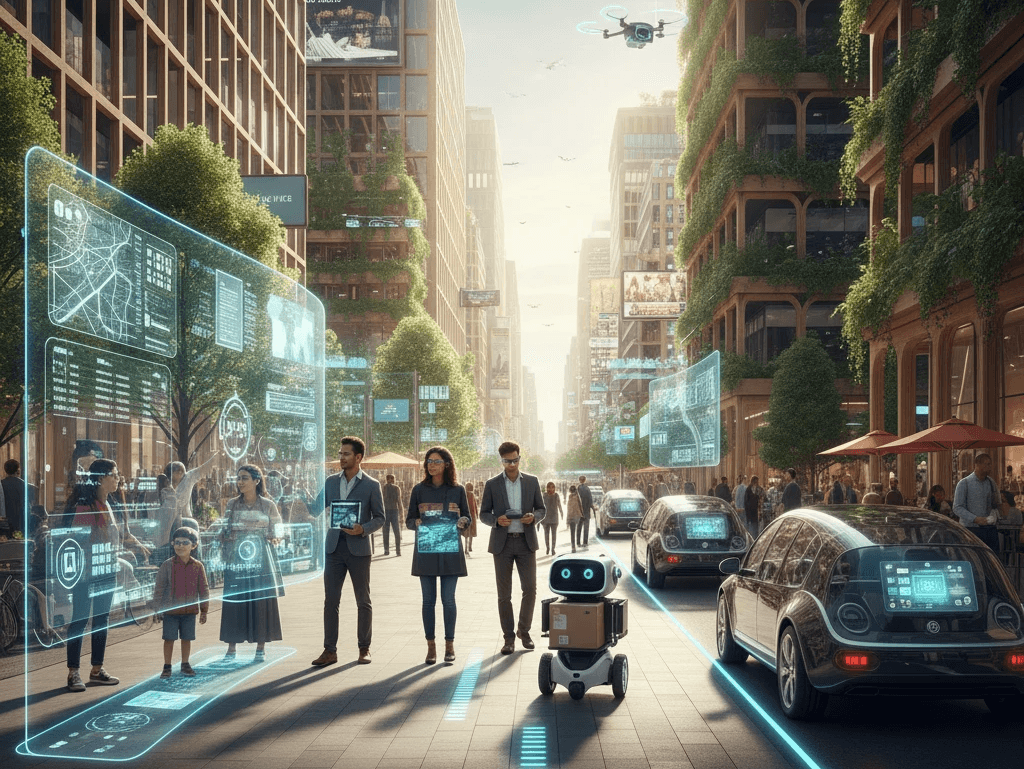
Abstract: The emergence of autonomous AI research agents represents a pivotal shift in the methodology of scientific and technological discovery. No longer confined to passive interaction, modern AI systems are evolving into goal-driven, self-directed researchers capable of hypothesis generation, experiment design, data analysis, and iterative refinement. This research-style blog explores the state of agentic AI in 2025, outlines key developments driving this transformation, and projects its impact on global R&D ecosystems. Through case studies, infrastructure trends, and safety considerations, this paper offers a strategic vision for the integration of autonomous research agents into mainstream innovation workflows.
1. Introduction: The Dawn of Agentic Intelligence
Artificial Intelligence (AI) has historically operated within predefined boundaries—classifying images, generating text, or responding to human queries. Yet as of 2025, a new paradigm has begun to assert dominance: autonomous AI agents. These systems are not just reactive models but proactive entities with planning, memory, tool use, and recursive self-improvement capabilities. Unlike traditional models, they require minimal prompting to initiate and complete complex tasks.
With the advent of large language models (LLMs), vector-based memory stores, multi-agent coordination protocols, and autonomous toolchains, we now stand at the precipice of AI systems that can drive their own scientific inquiry. This shift has the potential to multiply research productivity, reduce time-to-discovery, and fundamentally reshape how science and engineering are conducted.
Defining the Research Agent
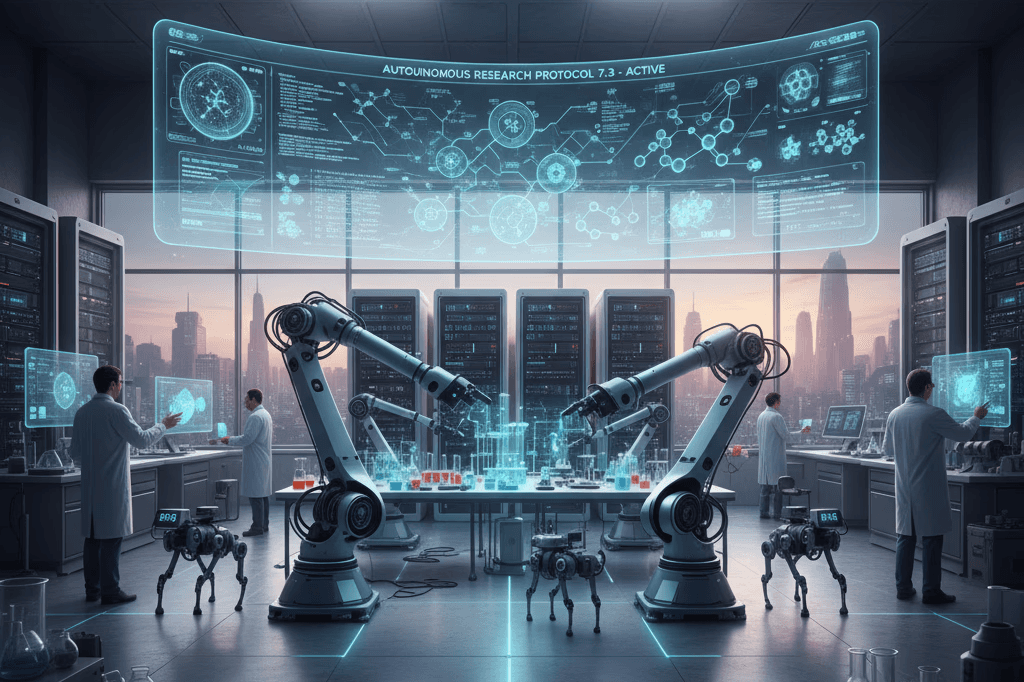
An autonomous research agent is an AI system capable of:
Understanding and decomposing high-level goals into structured subtasks
Accessing and interacting with APIs, tools, and databases
Designing and running experiments or simulations
Analyzing results, learning from outcomes, and iterating strategies
Unlike narrow AI pipelines, research agents integrate reasoning, memory, perception, and action. They may function solo or within multi-agent collectives coordinated for specific domains (e.g., protein synthesis, materials design, or AI algorithm improvement).
3. Technological Stack: From Foundation Models to Tool-Augmented Autonomy
The capabilities of modern research agents are built on four key foundations:
3.1. Language Models and Thought Loops
Modern LLMs such as GPT-4, Claude 2, and Gemini Pro provide the core reasoning and generative capabilities. Enhanced with chain-of-thought prompting and tool-use instructions, they are capable of extended planning and evaluation.
3.2. Tool Integration and Orchestration
Frameworks like LangChain, CrewAI, OpenAgents, and AutoGen allow agents to chain external tools—coding IDEs, databases, web scrapers, simulation engines—into coherent workflows.
3.3. Long-Term Memory and Semantic Recall
Vector databases (e.g., Pinecone, Weaviate) combined with episodic memory architectures allow agents to recall past experiments, strategies, and failures—supporting cumulative scientific learning.
3.4. Feedback Loops and Self-Improvement
Using reinforcement learning and evaluation frameworks (e.g., OpenCritic, Reflexion), agents can self-evaluate their outputs, refine hypotheses, and improve strategies across iterations.
4. Real-World Applications and Use Cases
4.1. Autonomous Software Engineers
Research agents like SWE-Agent and Devika are capable of understanding issue tickets from GitHub, synthesizing appropriate code, running tests, and submitting pull requests without human intervention. In recent trials, over 30% of tickets were resolved with human-level or better quality.
4.2. Drug Discovery and Molecular Simulation
Multi-agent systems are now being used to explore protein-ligand interactions, suggest novel compound modifications, and generate wet-lab-ready procedures. In silico trials powered by agents have compressed weeks of analysis into hours.
4.3. AI Algorithm Optimization
Perhaps most disruptively, AI agents are being tasked with improving AI architectures themselves. Recursive self-improvement is no longer theoretical; projects like Cognosys and OpenDevin demonstrate agents proposing novel activation functions, pruning techniques, and data augmentation strategies.
5. Strategic Implications: Rethinking R&D in the Age of Autonomous Agents
5.1. Human-AI Research Teams
Rather than replacing researchers, agents are becoming trusted co-pilots. This reconfigures labs into hybrid collectives, where AI handles exploratory and tedious cycles, while humans provide oversight, ethics, and direction.
5.2. Scientific Throughput and Democratization
The barrier to conducting cutting-edge research drops significantly. A high-school student with a laptop and agent stack may soon conduct literature reviews, simulate biological models, and publish papers.
5.3. Competitive Acceleration
Organizations embracing agents gain a compounding advantage in speed and breadth of experimentation. In a winner-take-all innovation economy, this could lead to major asymmetries in capability.
6. Governance and Risk Considerations
While research agents promise productivity gains, they also carry risks:
Misinformation Amplification: An agent generating plausible yet incorrect theories may poison scientific discourse.
Security Vulnerabilities: Autonomous code-writing agents interfacing with sensitive tools could be hijacked or misused.
Goal Drift and Alignment: As agents act independently, ensuring alignment with institutional goals becomes crucial.
These risks necessitate investment in interpretability, sandboxing, secure APIs, and audit frameworks for autonomous systems.
7. Forecast: What’s Next by 2027
Agents will publish research independently in preprint archives and scientific journals.
Agent collectives will design novel materials and medicines that pass human verification.
Competitive research timelines will compress from months to days.
Alignment, trust, and governance will become make-or-break factors for AI-augmented science.
Conclusion
Autonomous AI research agents are not a futuristic dream—they are a nascent reality poised to reshape scientific discovery. The institutions, labs, and innovators that embrace and responsibly integrate these agents will define the frontiers of knowledge in the coming years. We stand not just at the next phase of AI, but at the dawn of a new epistemology—one powered by synthetic minds working alongside human curiosity.